Sunday, December 17, 2023

Gorillas by Paul


My brother Paul was on the Safari but went Gorilla trekking with another group. His pictures, with a phone, show what an amazing experience the gorilla trekking can be.

It was about 8.8 to 12 million years ago that the group of primates who were to evolve into gorillas split from their common ancestor with humans and chimps; this is when the genus Gorilla emerged. Mountain gorillas have been isolated from eastern lowland gorillas for approximately 10,000 years and these two taxa separated from their western counterparts approximately 1.2 to 3 million years ago.[6] The genus was first referenced as Troglodytes in 1847, but renamed to Gorilla in 1852. It was not until 1967 that the taxonomist Colin Groves proposed that all gorillas be regarded as one species (Gorilla gorilla) with three subspecies Gorilla gorilla gorilla (western lowland gorilla), Gorilla gorilla graueri (lowland gorillas found west of the Virungas) and Gorilla gorilla beringei (mountain gorillas, including Gorilla beringei, found in the Virungas and Bwindi). In 2003, after a review, they were divided into two species (Gorilla gorilla and Gorilla beringei) by The World Conservation Union (IUCN).[5] There is now agreement that there are two species, each with two subspecies.[7]

Lake Mburo


Lake Mburo is a freshwater lake located in western Uganda, situated within the Lake Mburo National Park. It is a prominent feature of the region, known for its scenic beauty and rich biodiversity.

Lake Mburo is situated in the Ankole sub-region of Uganda, near the town of Mbarara. It is a shallow lake with a maximum depth of approximately 5 meters. The lake spans an area of approximately 260 square kilometers and is surrounded by rolling hills, open grasslands, and patches of woodland. The lake is home to a variety of wildlife, including zebras, impalas, buffaloes, giraffes, warthogs, and over 300 species of birds. It is also a popular destination for birdwatching, fishing, and boat riding. The lake was originally gazetted as a controlled hunting area in 1933, and was upgraded to a game reserve in 1963. It was finally declared a national park in 1983. The park is managed by the Uganda Wildlife Authority (UWA).

The lake and its surrounding ecosystem support a diverse range of plant and animal species. Lake Mburo is renowned for its avian population, with over 300 bird species recorded in the area. Rare species such as the African finfoot and the shoebill stork can be found here. The lake is also home to hippos, crocodiles, and various fish species, contributing to its ecological significance.

Lake Mburo is surrounded by communities primarily belonging to the Banyankole ethnic group. These communities engage in farming, fishing, and livestock rearing as their primary economic activities. The lake and its resources hold cultural and economic importance to the local residents, shaping their traditions and way of life.

Fishing plays a significant role in the livelihoods of the communities around Lake Mburo. Local fishermen rely on the lake as a vital source of sustenance and income. Various fish species, including tilapia, lungfish, mudfish, and catfish, can be found in the lake. Fishing methods range from traditional techniques using nets and hooks to small-scale commercial operations.

Lake Mburo attracts visitors from around the world who come to explore its natural beauty and wildlife. The lake offers a range of recreational activities, including boat safaris, sport fishing, and guided nature walks. These activities provide opportunities for tourists to appreciate the scenic surroundings and observe the diverse wildlife inhabiting the area.

Lake Mburo and its surrounding ecosystem face various conservation challenges, including habitat loss, human-wildlife conflicts, and poaching. Efforts are being made to address these issues through initiatives such as community engagement, education, and law enforcement. The Lake Mburo National Park plays a crucial role in protecting the lake and its biodiversity.

While at Lake Mburo we did a boat trip looking for wildlife but especially two very tricky target bird species: African Finfoot [which we saw well] and White backed Night Heron [which we saw but not well enough for a photo...] We also saw a range of other species, including our first Hippos.


Water Thick-knee - A tall, dome-headed, plover-like bird with large, yellow eyes. Mostly brownish in colour, it has a greyish wing panel that is bordered above with a narrow white bar. This thick-knee never wanders far from permanent water. It is crepuscular and nocturnal; early evenings are often punctuated by its distinctive, high-pitched, piping calls that speed up then slow down. 

African Finfoot - A dark, elongated, duck-like, aquatic bird with neon orange bill and legs. The back and underparts are variably spotted and barred. The throat is grey in the male and white in the female. It swims slow and low in the water with its tail held on the surface. This secretive bird moves in pairs on perennial rivers, swamps, and quiet clear backwaters, foraging under overhanging cover for invertebrates, frogs, and fish. The short, thick neck and bright-coloured bill and feet differentiate it from darters and cormorants.

African Finfoot

African Finfoot

African Finfoot - male

African Finfoot

Hammerkop [and Nile Crocodile]

Bushbuck

Ken Cross

All pictures Ken Cross


Monday, October 16, 2023

M'BURO NATIONAL PARK


 As we entered the park after nightfall little game viewing was enjoyed however it was with some genuine excitement that our first Zebras were seen crossing our path! Other mammals would have to wait for the next day....

Lake Mburo National Park is Uganda's smallest National Park and the one closest to Entebbe.

Lake Mburo was originally gazetted in 1933 as a controlled hunting area and upgraded to a game reserve in 1963. The region was settled by Banyankole Bahima pastoralists who traditionally herd Ankole cattle, and still do. The residents continued to graze their cattle in the reserve, a situation decried by western conservationists, who termed them "invaders" in 1981, but were expelled from their lands after it was upgraded to national park status in 1983, as hoped for by some in the West. The Obote government's upgrade decision was intended, in part, to weaken the Banyankole, who supported anti-Obote rebels. It came at the time of the Operation Bonanza massacre of 300,000 people during the Ugandan Bush War. As the evicted pastoralists were not compensated for lost grazing land or assisted with resettling, many remained hostile to the upgrade. The rangeland outside the park was subsequently subdivided into small ranges and subsistence farming plots.

In 1985, the second Obote regime fell and the previous residents of Lake Mburo re-occupied the park's land, expelling park staff, destroying infrastructure, and killing wildlife. Less than half of the park's original land area was eventually re-gazetted by the National Resistance Movement government in 1986.

Within the park there are still culturally significant locations, such as Rubanga, where sacrifices were once made to the gods, Ruroko is where the semi-mythical Bachwezi lived, and Kigarama was where the pages (servants) of the king used to stay.

The park hosts zebra, hippopotamus, impala, warthog, common eland, African buffalo and over 300 bird species. Predators may include the lion, leopard, hyenas, genets, African civet, jackals and serval, and since 2015 there is a population of Rothschild's giraffe.

The protected area was considered a 'lion conservation unit' by the IUCN in 2005, despite lions no longer occurring here. Lions were eliminated by the indigenous people in the 1980s, but there were reports in early 2015 of a single lion roaming the areas of Miriti, Kashara, Warukiri and Rwonyo. Because this was considered problematic by the local residents, a solution offered was to translocate the lion to the zoo. At the same time, park management floated the idea of reintroducing lions to the park. The lion roaming the area eventually attacked and injured three people, causing a large crowd of the enraged community to hound the animal with stones and sticks. The Uganda Wildlife Authority made the decision to kill the animal, as the community was angry and the situation had become dangerous. It is thought to have migrated from Kagera Game Reserve in Tanzania.

 A problem facing grazers in the park are the changes in habitat occurring over time. Most areas which were formerly grassland in the park have changed into bushveld or forest as the invasive native shrubby tree species Acacia hockii has colonised these areas. The acacia in turn is protecting other bush and tree species, which are growing faster and thicker. This afforestation is forcing animals into the surrounding ranches and private land, causing them to be resented as pests. Uganda has tried to organise these areas into controlled hunting areas for sport, but land owners complain the money this generates is being spent on community projects such as schools, health centres and roads rather than addressing individual challenges resulting from problem animals. The procurement of an excavator for habitat management, different wildfire regimes, fencing, translocating excess animals, wildlife ranching for the hunting industry, community tourism, licensing more sport hunting companies and increasing quotas may alleviate this; the local community is permitted to uproot acacia for firewood, but this has proved ineffective. Hyenas and bushbuck in particular are considered problem animals.

Wikipedia


Yellow billed Duck

Common Waterbuck buck

Black headed Heron


Common Warthog

Yellow billed Oxpecker

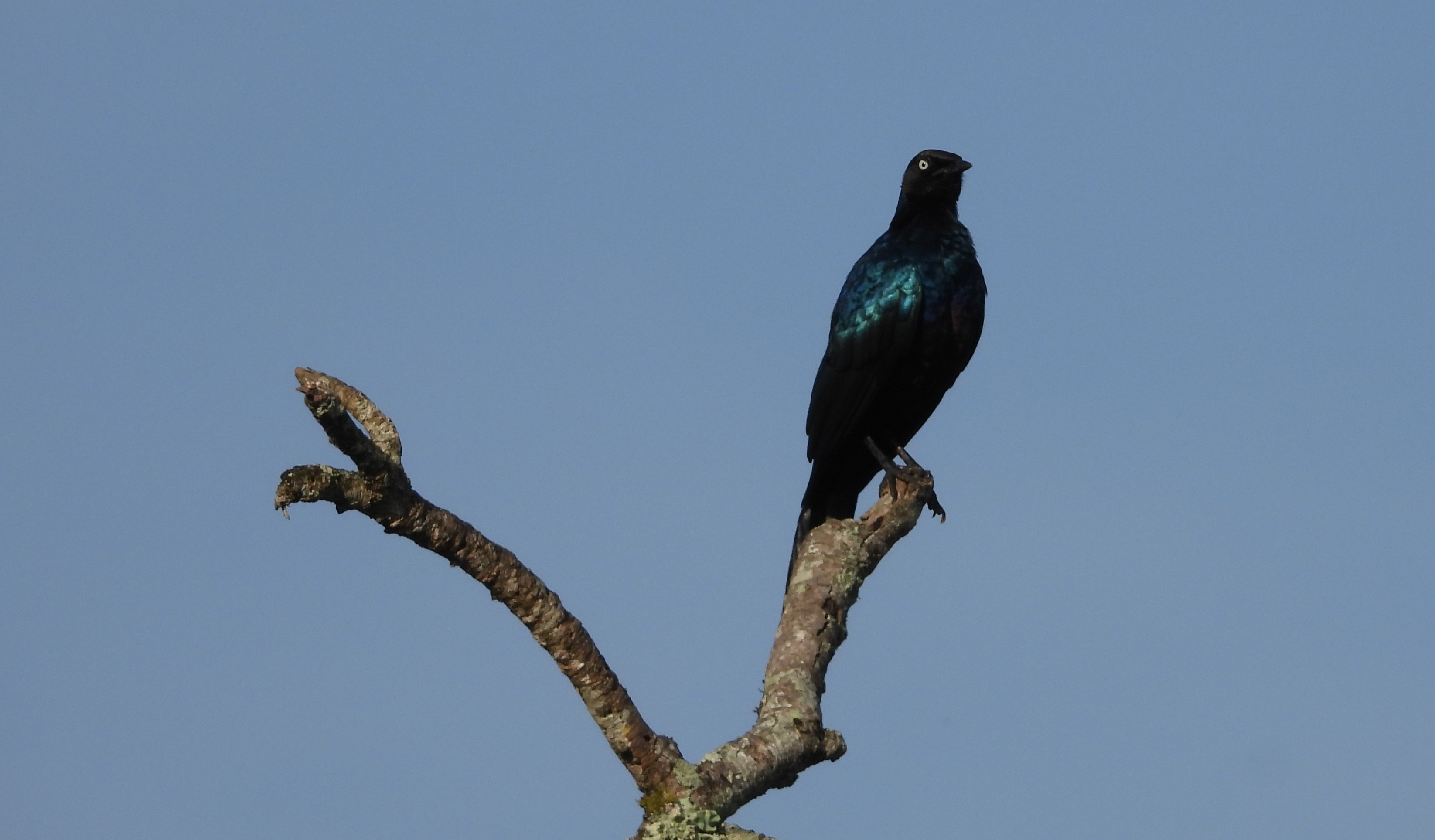
Ruppell's Starling

Ruppell's Starling

Lesser Masked Weaver

a young Waterbuck buck

Ruppell's Griffon Vulture

Senegal Lapwing - adult

Senegal Lapwing - immature

African Wattled Lapwing

Lappet faced Vulture


Yellow throated Longclaw

Red necked Spurfowl
Ken Cross

All pictures Ken Cross

MADAMBA SWAMP


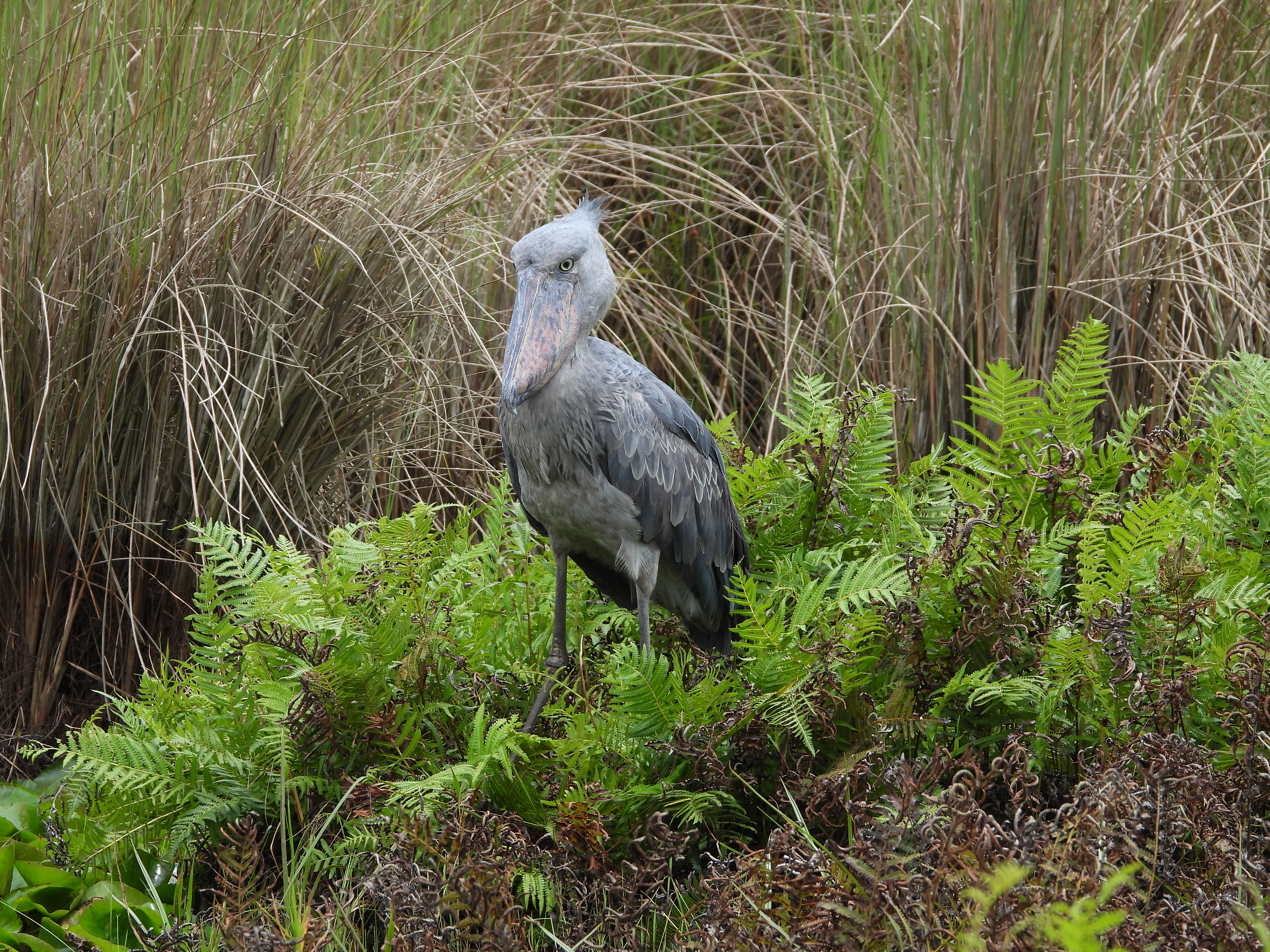
Shoebill

safari - n

  1. an overland journey or hunting expedition, especially in Africa
  2. any recreational journey or expedition
  1. the people, animals, etc, that go on the expedition

Origin?  C19th: from Swahili: journey, from Arabic safarÄ«ya, from safara to travel

Today our safari began: leaving Entebbe via boats enroute to Madamba Swamp. Here we traded down to smaller vessels which were steered, pushed, poled, pulled, heaved through smaller and smaller waterways and, indeed, where there was little water as we searched for our first target species: the Shoebill.

Very happy to say that we were ultimately successful in our venture! Thanks to the incredible efforts of our boatman, who, on our behalf, would not give up.

poor shots of Spot throated Otters - seen from our boat before departing Entebbe

Grey Heron

Pied Kingfisher

Black Crake

African Jacana

Little Egret

Dragonfly sp?

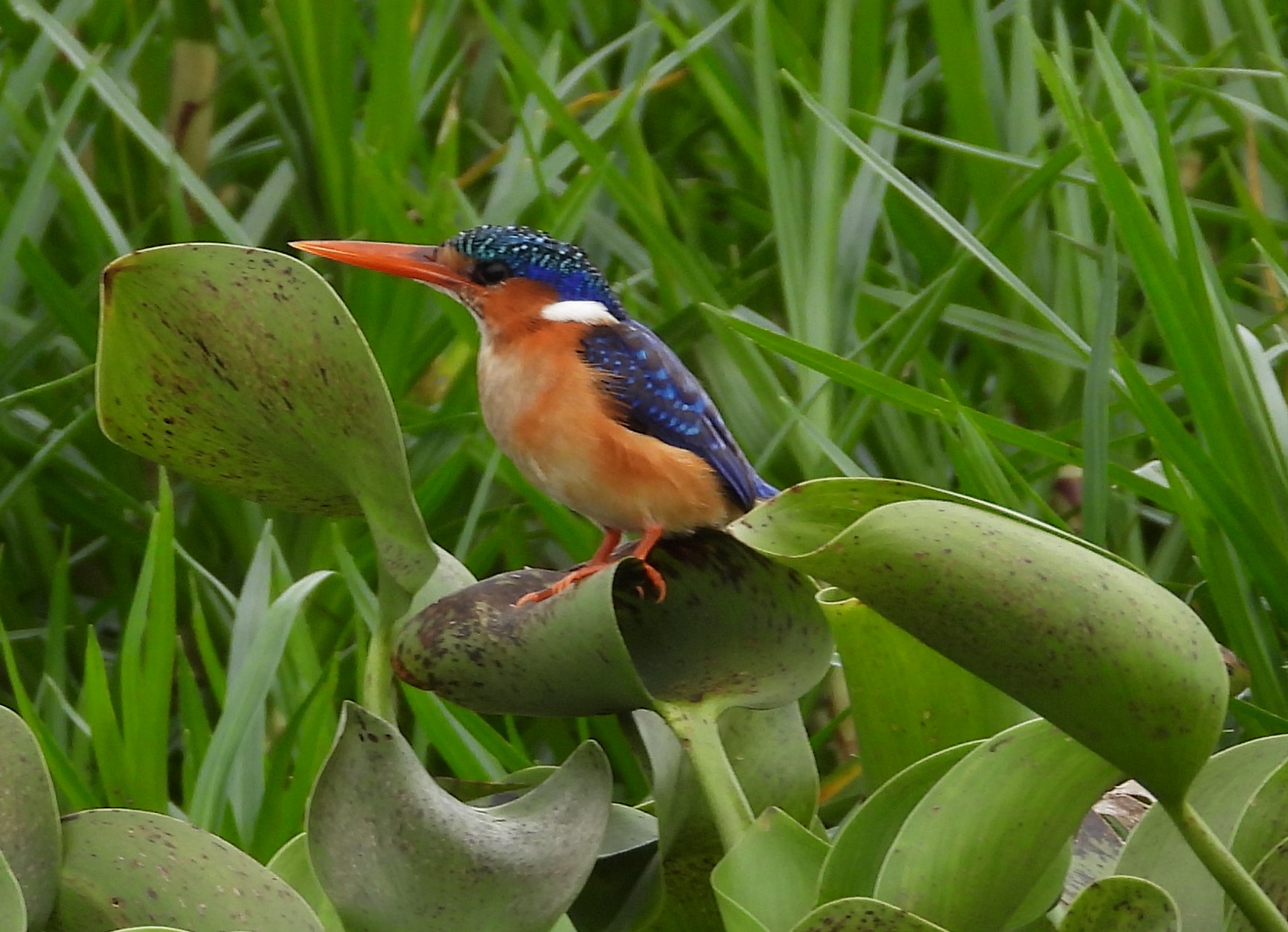
Malachite Kingfisher

The exit from the waters was also dramatic. An equatorial storm descending. A brief excited view of a rare swamp antelope named the Sitatunga. [The boatman were yelling Sitatunga as the antelope bounded above the eye line out of the swamp but most were blissfully unaware that Sitatunga was an animal and thought they were yelling about the darkening clouds....]

a bothering of boats

Drew Matthews celebrating birding success

Storm is a coming....

We reached the shore. Toileted. Piled in our Toyotas and the heavens opened! We needed to do our first four wheeling to round a fallen tree that had blocked the road. Easy!

In between times we crossed the equator.


Next stop? A one night stay at a lodge near Lake M'Buro National Park. 


MADAMBA SWAMP:

Mabamba is an extensive marsh stretching through a long narrow bay, fringed with papyrus Cyperus papyrus towards the main body of Lake Victoria. Miscanthus and Cyperus species dominate, but there is a narrow open water channel and a small patch of water-lilies Nymphaea. There are also areas of sedge Cladium, and sometimes drifting papyrus swamp islands. The Bay forms part of Waiya Bay, south-west of Nakiwogo Bay; these are all to the west of Entebbe International Airport. This IBA is one of the best marshy areas along the northern shores of Lake Victoria.

There has been no detailed inventory of the bay and its associated swamps, but one has now begun. However, a recent study of waterbirds of Lake Victoria revealed the presence of several species of conservation interest. This is the closest place to Kampala where Balaeniceps rex are regularly seen. The surrounding communities have reported breeding, and the young are sometimes collected by local people to be raised and eventually sold. This has not been very successful because of the specialized feeding habits of the birds, and as they grow they become expensive to feed. Balaeniceps rex feeds primarily on lungfish Protopterus aethiopicus, which is also prized by the local community. Balaeniceps rex is regularly recorded in pairs and threes in the marsh at Nakiwogo, c.2 km north-east of Mabamba Bay.


Ken Cross
All pictures Ken Cross